

Mental health, self-care, nervous system regulation, and healing have become common topics across social media, but what does caring for your mental health actually look like in everyday life?
Take a moment and ask yourself: What is one positive thing I can do for my brain right now?
Maybe an answer comes immediately. Maybe you have been so busy caring for everyone and everything else that you have not considered your own needs. If you are drawing a blank, that is okay.
News, conflict, responsibilities, relationship struggles, financial concerns, grief, and the carefully curated lives of others are available around the clock. It is understandable that your mind and body may feel overwhelmed. Feeling stressed does not mean you are weak or failing. It may mean your nervous system has been carrying too much for too long.
How Stress Affects Your Brain and Body
When your brain senses danger, faces conflict, or feels overwhelmed, your nervous system may respond automatically. These protective reactions are often described as fight, flight, freeze, and fawn:
- Fight: Confronting the threat through anger, irritability, defensiveness, or control.
- Flight: Escaping the threat through worry, avoidance, restlessness, or staying constantly busy.
- Freeze: Becoming still or shutting down through numbness, brain fog, disconnection, or feeling stuck.
- Fawn: Seeking safety by pleasing others, avoiding conflict, ignoring your needs, or struggling to set boundaries.
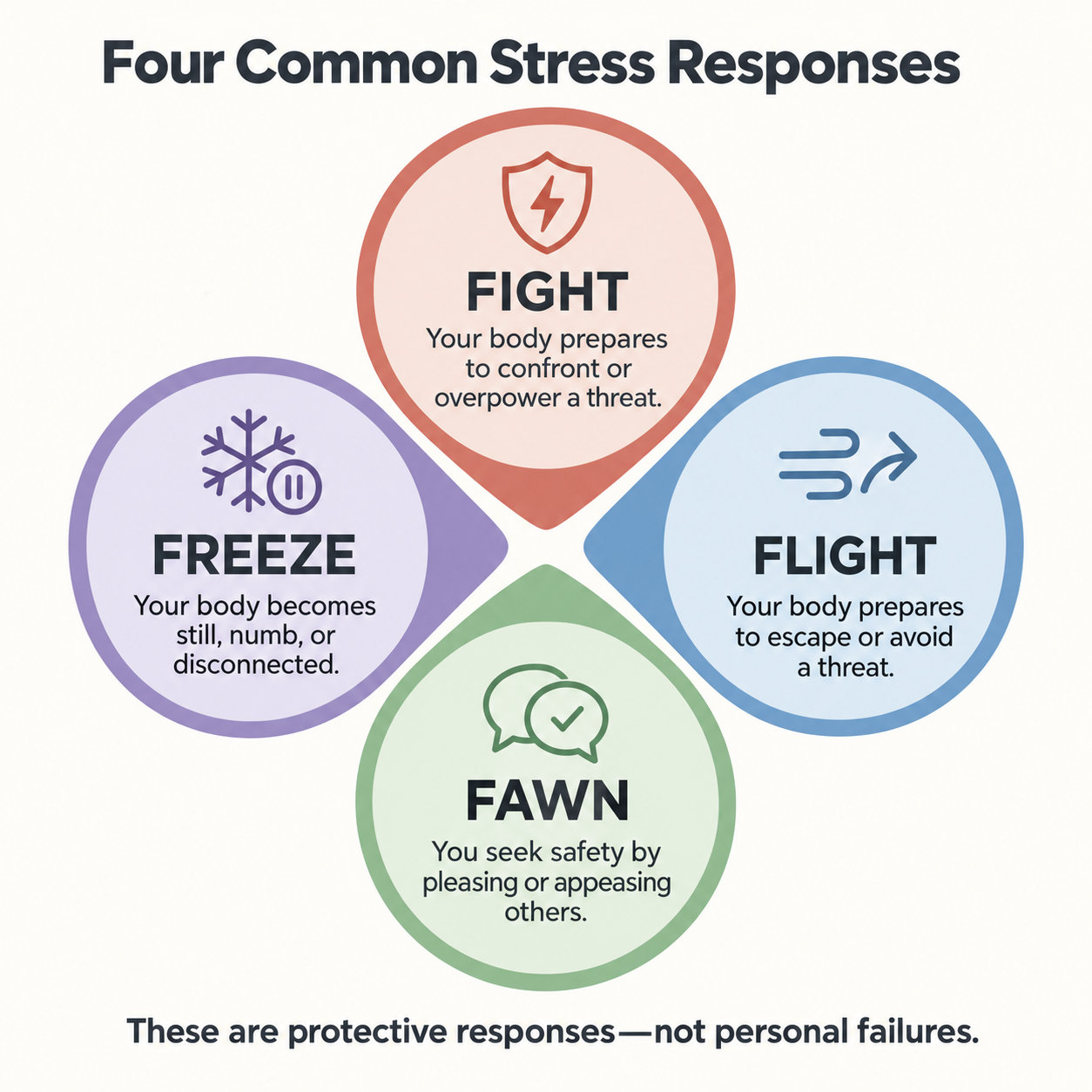
These responses are not character flaws. They are ways your nervous system attempts to protect you. You may experience more than one, and your response may change depending on the situation.
How to Calm Down When You're Feeling Overwhelmed
When emotions become overwhelming, you may “flip your lid,” meaning your brain’s alarm system takes over, and clear thinking becomes more difficult. Although you may not be able to control your initial reaction, you can practice noticing it, pausing, and grounding before deciding what to do next.
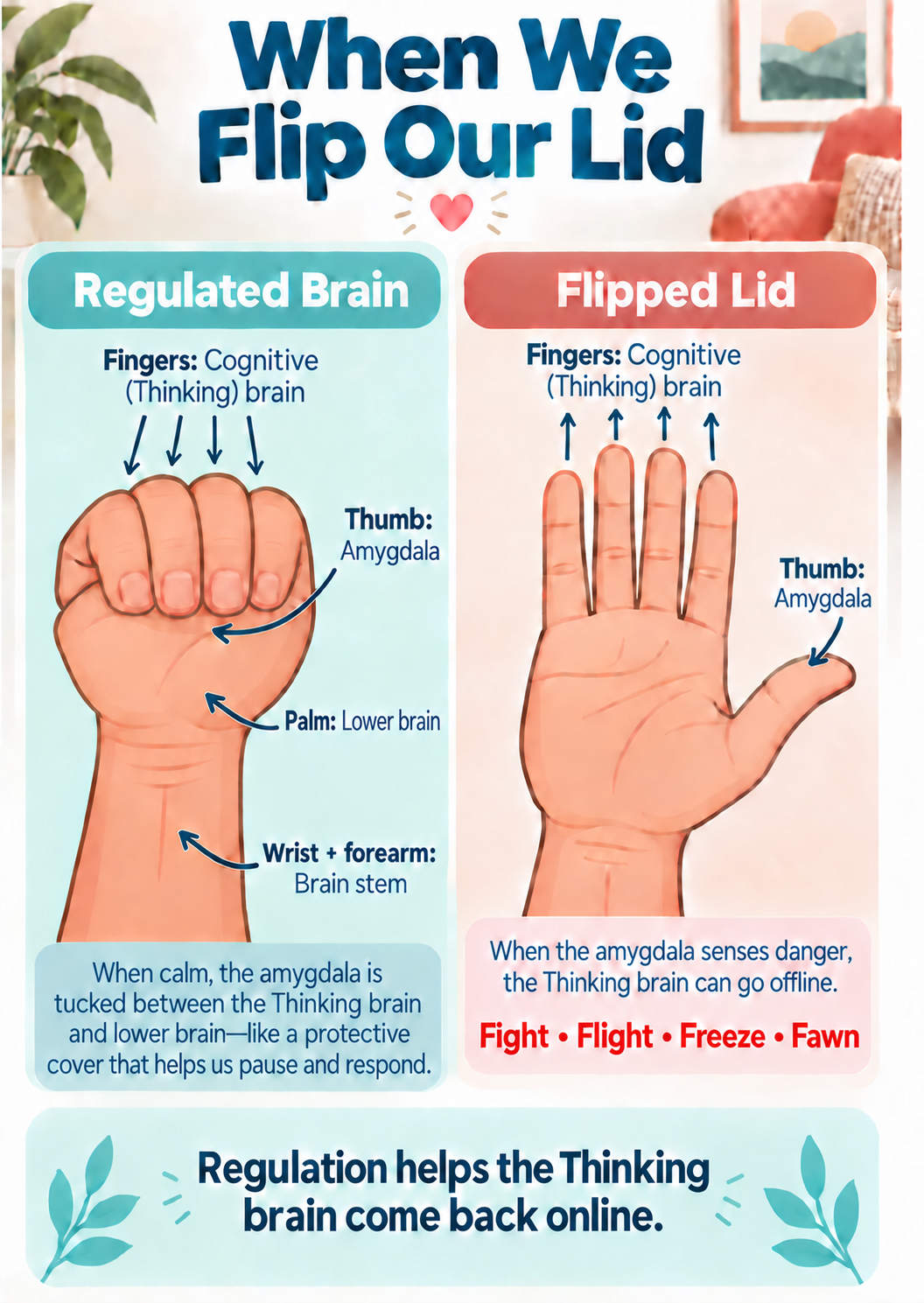
To ground yourself, ask:
- What am I feeling?
- What is happening in my body?
- What do I need right now?
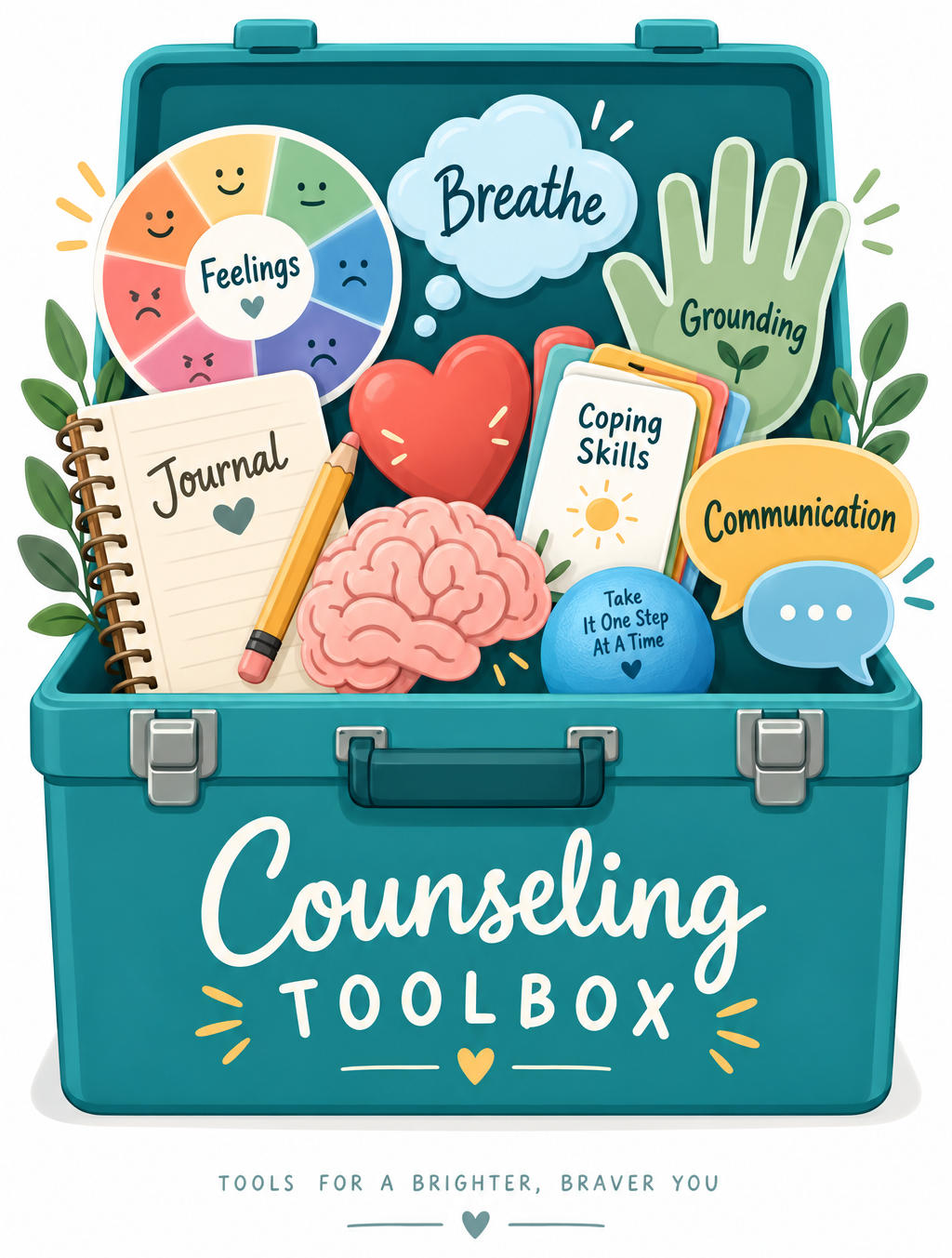
- What is in my toolbox?
Caring for yourself might mean stepping outside, taking a few slow breaths, drinking water, moving your body, praying, resting, setting down your phone, setting a boundary, or talking with someone you trust.
Although social media and doomscrolling may offer temporary relief, they do not truly calm the brain, and the stress often returns, sometimes even stronger. Finding healthier ways to cope takes effort, but simply pausing to read this is already a step toward caring for yourself.
For me, calm often looks like stepping outside, enjoying nature, or spending time with animals. Whether I am with my three puppies or around horses, animals are my safe and happy place. I also enjoy getting lost in a fantasy book, exploring new worlds alongside the characters.
Creative outlets also help me engage and calm my mind. I love coloring, painting, sculpting, building, and turning random objects into something new. Creating gives my mind space to focus, explore, and enjoy the process.
Caring for your mental health does not always require a major change. Sometimes, it begins with one small choice that says, “I am listening, and I am allowed to care for myself.”
What is one thing you can do for your mental health today? To help you get started, download this free guide to help you pause, notice, and nurture your soul.

Written by Meleah Goodman, Christian counselor at Cornerstone
Find Support for Your Mind, Body, and Spirit
Caring for your mental health starts with small steps, but sometimes you need extra help along the way. A Christian counselor can help you understand your stress responses, develop healthier coping strategies, and find a greater sense of balance.