

If you grew up or have lived in two different cultures, you’ve probably wondered, “Where do I really belong?”
Maybe you have to act, talk, or even dress a certain way in public, but when you’re around your family or back in your home country, you become a totally different person. Almost like a spy living a double life!
That adaptability can be a strength. But it can also become exhausting when you constantly feel the need to monitor yourself.
Living between cultures can deeply shape your identity. It’s almost like you’ve learned a unique cultural language that not many people understand. So, to connect with others, you constantly have to learn and speak their cultural language, too.
If this sounds familiar, you are not alone!
There is actually a term called Third Culture Kid (TCK), introduced by sociologist Ruth Hill Useem to describe children growing up outside their parents’ home culture. While not everyone living between cultures fits this definition, many share similar experiences.
Interestingly, research by Moore and Barker (2012) suggests that third-culture individuals don’t necessarily develop a confused identity. Instead, they can develop a unique multicultural identity while still navigating questions about belonging.
In other words, you can become very good at navigating different cultures and still wonder where you truly belong.
The Conflict of Living Between Two Worlds
Living between cultures can feel like being pulled in two directions.
On one side, you worry about disappointing your family or abandoning traditions. On the other, you feel pressure to fit in, adapt, and be accepted.
The inner questions might sound like:
“Can I choose my own path without betraying my family and everything they taught me?”
“If I stop living by my culture’s expectations, am I losing my roots or finally discovering who I really am?”
“Why can’t I just be myself without feeling guilty?”
When you’re constantly adjusting your behavior and worrying about others’ reactions, you may begin to feel like you are unheard, misunderstood, or the odd one out.
People often come into the counseling room struggling with anxiety, perfectionism, people-pleasing, family conflict, or difficulty setting boundaries.
But underneath these struggles, there is often a deeper, unspoken question about identity and belonging.
Who am I, really? And where do I belong?

The Quiet Grief of Being Misunderstood
Imagine growing up in a non-American household hearing:
“Family comes first.”
But at school, American culture teaches:
“Be independent. Speak up. Put yourself first.”
Neither message is necessarily wrong. But imagine being a child trying to figure out how to live by both!
These conflicting expectations can show up in relationships, career choices, religion, gender roles, and even how you set boundaries.
Over time, you may develop a habit of constantly monitoring yourself:
“How should I act here?”
“Will they judge me?”
“Am I being disrespectful?”
But there is another part of this experience that often goes unnoticed.
The hidden grief.
No matter how hard you try, you may still feel that the people you deeply love don’t fully understand who you’re becoming.
Not because they don’t love you, but because they may only understand one cultural language, while you’ve learned to live in several.
And that can be lonely.
You want to honor where you came from, but you also want to be understood for who you are.
🌱 Grounded in Faith & Wisdom
Get practical, faith-based guidance in your inbox to help you nurture relationships, set healthy boundaries, and find peace.
Creating Space to Hear Your Own Voice
In the midst of balancing everyone else’s expectations, pause and ask yourself:
Do you know what you truly want?
I mean YOUR desires, YOUR values, and YOUR dreams. Not what your family wants or what others think is best for you.
Can you recognize your own voice among all those expectations?
Finding who you are at your core can be challenging when you’ve spent much of your life navigating different cultural expectations.
This is where counseling can help.
Imagine having a therapist who understands your unique cultural language. Someone who doesn’t impose their own ideas about what you should do, but approaches you with genuine curiosity about what’s going on in your mind, heart, and soul.
Someone who can sit with your frustration, confusion, and struggles without judging you.
Wouldn’t that kind of relationship be healing?
The goal isn’t necessarily to find the perfect label for your identity. It’s about discovering an identity that feels authentic and grounded in who you truly are.
The key is realizing that you don’t have to choose one culture over the other.
It’s not all or nothing. It’s about integration.
Integration means being able to say:
“All of these cultures and experiences have shaped me, and I get to decide what I carry forward.”
You can appreciate your family’s culture without accepting every expectation. You can embrace another culture without betraying where you came from.
Both can be true.
Where Faith Meets Cultural Identity
The Bible reminds us that as believers, our ultimate citizenship is in heaven (Philippians 3:20). Our deepest sense of belonging comes from our Heavenly Father, not from any particular culture or place on earth.
But does that mean we should reject our earthly cultures, relationships, or traditions? Not at all!
We can honor where we come from, appreciate the cultures that shaped us, and still remember that our identity is ultimately rooted in Christ.
It’s not about rejecting one to embrace the other. It’s about knowing where our deepest belonging comes from while faithfully living in the world God has placed us.
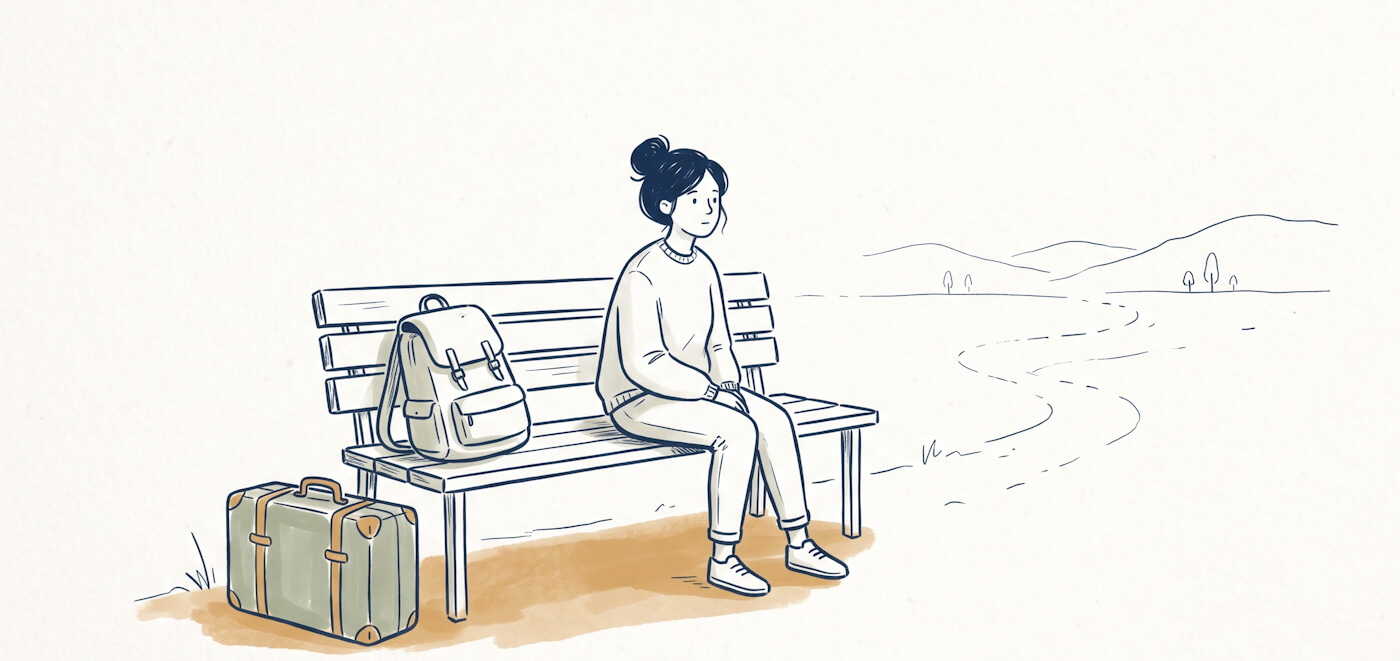
Gray’s Story: The Weight of Living by Two Playbooks
Let me share a story about someone who grew up between two cultures. We’ll call her “Gray.”
Gray grew up in a non-American household where being a “good daughter” meant showing respect through obedience, prioritizing family needs, and keeping the peace.
Meanwhile, at school, American culture taught her to speak up, be assertive, and advocate for herself.
Neither set of values was bad. But imagine being a little girl trying to figure out how to live by both!
From a young age, Gray mentally rehearsed everything before speaking:
“How do I say this without upsetting them?”
“Am I being too difficult?”
This adaptability helped her navigate different relationships. But somewhere along the way, she began believing that being accepted meant constantly meeting other people’s expectations.
As an adult, she struggled in her marriage, exhausted from pleasing everyone. Her anxiety at work eventually became so overwhelming that she walked away from her dream job.
And there she was. A woman who had accomplished so much, built a successful career, and created a family with a loving husband.
Yet suddenly, she felt like she was failing at everything.
She couldn’t understand why.
In therapy, instead of treating her anxiety as just a symptom, we explored the cultural expectations underneath it.
Gray realized something important.
The problem wasn’t that she belonged to two cultures. It was that she felt responsible for meeting every expectation from both, even when they contradicted each other.
No wonder she was exhausted!
She began realizing that having a voice didn’t mean being disrespectful. She could set boundaries and still love her family.
Instead of asking which culture she should follow, she began asking which values she genuinely wanted to carry forward.
She wasn’t choosing one culture over another. She was learning to bring the different parts of herself together.
The cultural conflicts didn’t disappear. But she no longer had to renegotiate who she was every time she entered a different cultural space.
She was learning to be herself, wherever she was.
Untangling Your Identity: Two Exercises to Help You Find Your Voice
Exercise 1: The Three Columns
Take a piece of paper and divide it into three columns:
- What I inherited: Traditions, beliefs, and expectations passed down to me.
- What I choose: Values that genuinely resonate with who I am.
- What I’m creating: New traditions, boundaries, and ways of living that reflect who I’m becoming.
Then ask yourself:
Which expectations do I follow out of love, and which ones do I follow out of guilt, fear, or obligation?
Exercise 2: Challenge the “Not Enough” Voice
When you catch yourself thinking, “I’m not American enough,” or “I’m not a good enough daughter or son,” pause.
Ask yourself:
“Who taught me what ‘enough’ looks like? And do I actually agree with their definition?”
Sometimes, recognizing whose expectations you’re carrying is the beginning of finding your own voice.
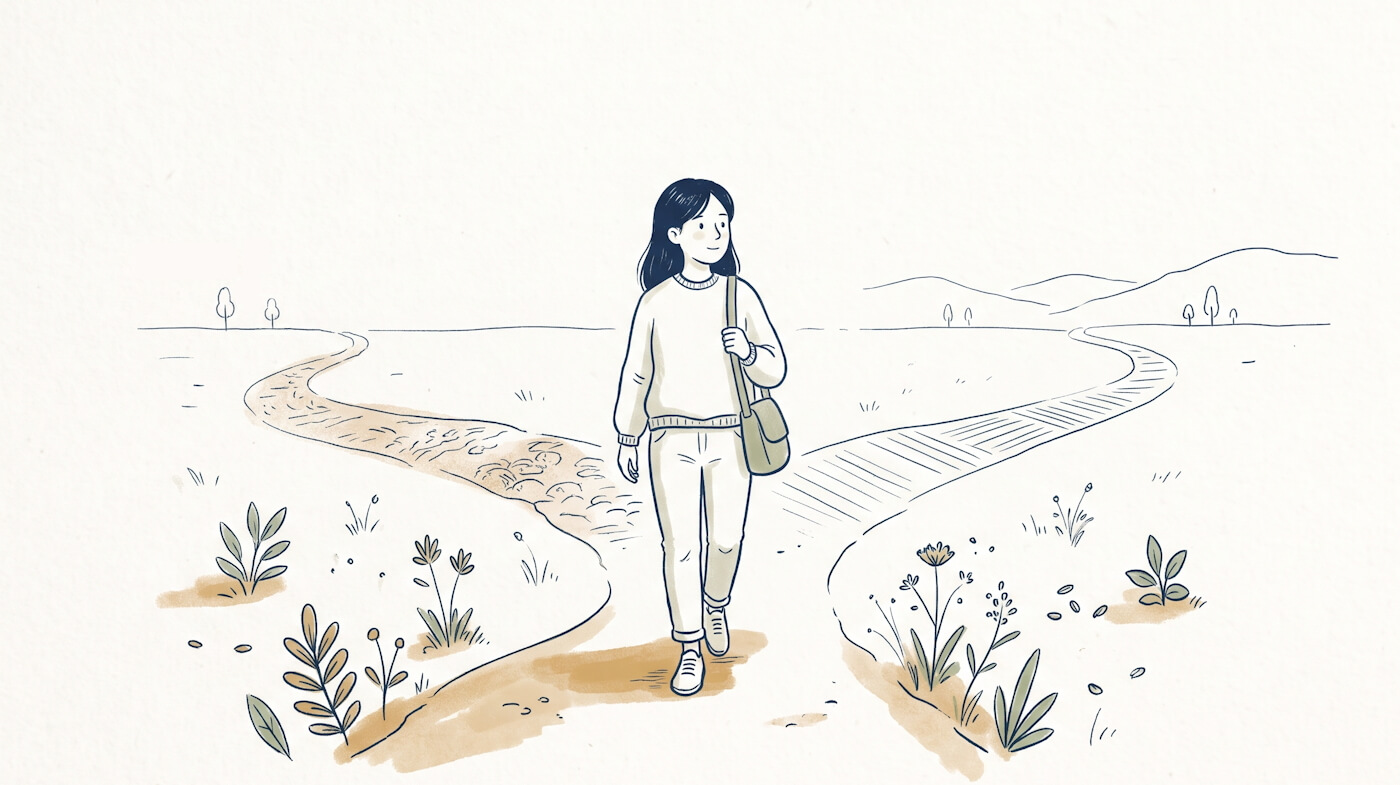
Finding Your Footing Between Worlds
Living between cultures means carrying a unique story. But you shouldn’t have to spend your entire life translating yourself or squeezing into one cultural box just to belong.
You can honor where you come from without abandoning who you are becoming.
And you can love your family without making every decision they would make.
At Cornerstone Christian Counseling, we’d love to walk alongside you as you explore your identity, understand your struggles, and find your own voice.
Our team can match you with a counselor who understands the complexity of living between cultures.
Because you deserve to be heard, understood, and accepted for who you truly are.

Written by Alice Sainjargal, Christian counselor at Cornerstone
REFERENCES
Moore, A. M., & Barker, G. G. (2012). Confused or multicultural: Third culture individuals’ cultural identity. International Journal of Intercultural Relations, 36(4), 553–562. https://doi.org/10.1016/j.ijintrel.2011.11.002