
In Their Shoes: Holiday Depression (and How to Help)

CCC-Holiday-Depression-2

Holiday Depression

Some people know all too well how the holidays seem to make the symptoms of anxiety, depression, and grief even more difficult to cope with. Some people may not feel this same struggle, but chances are that they have friends, co-workers, and family members joining them for Thanksgiving and Christmas who appear to be doing well on the outside but the internal battle may be raging.  

Over the next three blogs, we are going to talk about how to spot different degrees of some common symptoms of anxiety , depression, and grief.​ We will also give you some quick ideas about what you can do to help. If you are reading this and are currently suffering with these symptoms, we hope that this will give you some insight about how to cope and maybe even find language to express some of the needs/boundaries that you might have so that others might better support and comfort you.  

Research tells us that 1 out of 4 people directly experience an ongoing debilitating mental health disorder, that affects their daily life functioning.  

“One in four people in the world will be affected by mental or neurological disorders at some point in their lives. Around 450 million people currently suffer from such conditions, placing mental disorders among the leading causes of ill-health and disability worldwide. 

Treatments are available, but nearly two-thirds of people with a known mental disorder never seek help from a health professional. Stigma, discrimination and neglect prevent care and treatment from reaching people with mental disorders”  Source

What are some common causes of holiday depression?

Many people experience their own version of a “blue Christmas” during this time each year, but sometimes the reasons for this are unique. There are many causes for increased depression around the holiday season, but a few of the most common might be: 

Loneliness and Social Isolation: In my experience, this is the greatest causes and predictors of exacerbated depression during the holidays. There are so many people who are alone due to distance, financial restraints, jail/prison, military deployment, estrangement, and/or social anxiety.  Many people fear connection because of past hurt, but unfortunately, withdrawing often makes the feelings of loneliness and symptoms of depression worse. 

Fatigue: Fast paced, crammed holiday schedules can bring on an increased sense of exhaustion, which many people have to deal with during this season. Fatigue can lead to a lack of energy and exercise, not wanting to leave the house, poor sleep, and may even lead to a weakened immune system and therefore increased illness.

Family-Related Issues and Toxic Relatives: Holidays can make for tense and awkward family reunions for people who do not see much of their family outside of these annual events. This may make this particular season a little more difficult to deal with than others. Some family members bring up conversation or engage in behaviors that are triggering and overwhelming for people with depression, especially if there are any unresolved conflicts from the past with these individuals. 

Unrealistic Expectations: It can be easy to “glamorize” and idealize the holiday season, but this can often lead to disappointment and a feeling of rejection and/or failure for those who struggle to manage their expectations. Sometimes, the picture that we envision for these gatherings can fall short, and if we are not aware, can deepen the sense of sadness. 

Financial Problems: This time of year can be a huge source of stress and pressure for many people. Buying gifts, sending out letters, and contributing to events can be very costly, especially for people who have lower income and barely manage to pay their monthly bills. 

Grief and Loss: Our next and last blog in the series will explore the topic of “grief” in greater depth. But, holidays are especially hard for anyone grieving the loss of a loved one, whether recently or after decades. 

What are some common causes of holiday depression?

Amy shares her experience of depression:

“Depression… it just eats you up from the inside out. It’s like a monster inside your head that takes over. The worst thing is to know that my family and friends were doing all they could yet I still felt so lonely. Anything that was said to me, I managed to turn into a bad thing. I was literally my own worst enemy. I would come home and feel so exhausted from all of the voices in my head that I would just sleep to block it all out. I didn’t want to wake up because living was a nightmare. I felt sick with the fear of night time because that’s when the voices got even louder. I would get so frustrated because it seemed impossible to sleep, as if insomnia and depression go hand in hand.

I knew I needed help but asking for it just made me feel like a burden. I wanted to be free of meds, doctors, counsellors, hospitals and negative thoughts. I felt as if I had lost myself and wouldn’t ever be the same again. I had no motivation to do anything because I couldn’t see a future for myself. Anxiety caused me to believe everyone was faking their love for me. ‘Cheer up’ was the worst thing anyone said to me. Those two words triggered thousands of horrible thoughts and I was beating myself up for not hiding how I felt well enough from everyone around me.”

Whether you personally resonate with Amy’s story or you know someone who experiences depression, this is a very real description of what someone might be feeling and thinking. Depending on the level of severity, some people’s symptoms can potentially prevent them from being able to engage with any measure of comfort or ease in conversations or activities.

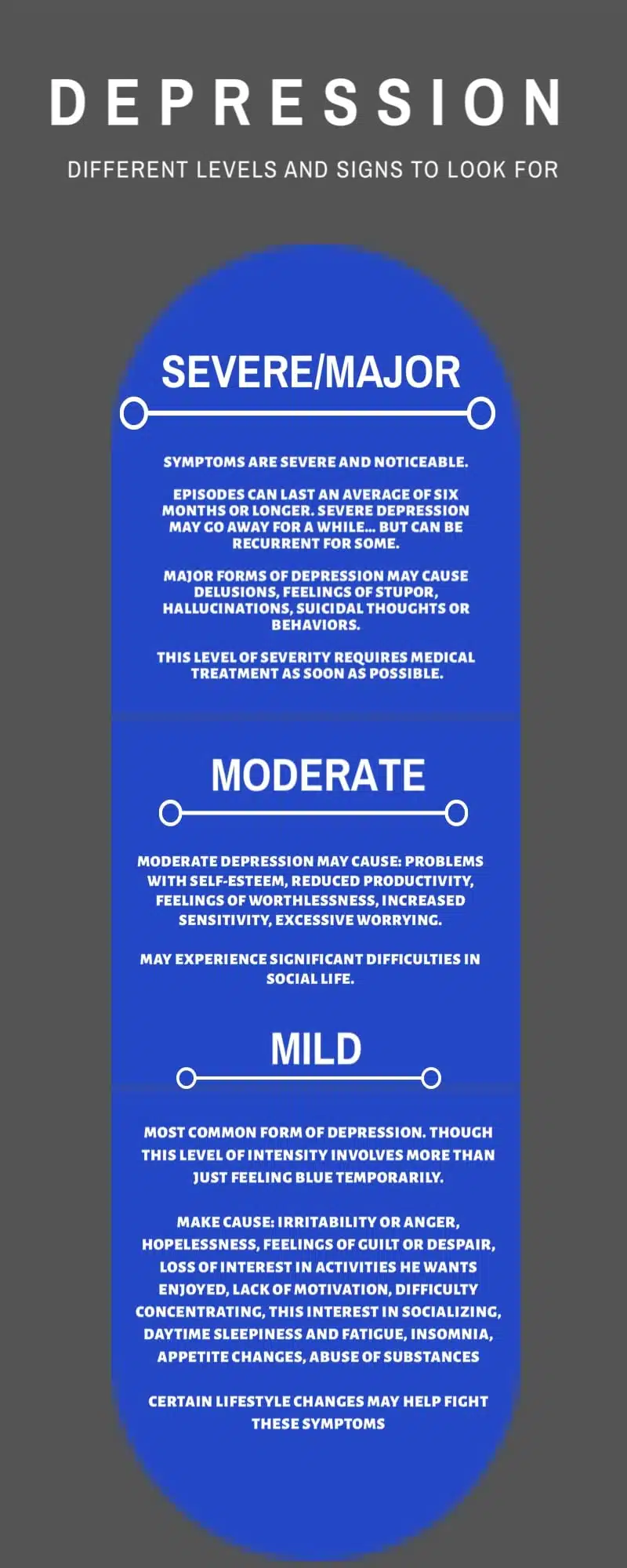
Below is a downloadable infographic that we have created to help you to identify different levels of depression and some of the common symptoms and signs of each level.

How can I help?

If you have 16 family members coming over to celebrate the holidays, remember that statistically 4 of the 16 (or more) are currently struggling with some form of mental health issue. Know that everyone experiences anxiety differently and that because of this, there is no “one size fits all” tool to help.  

As it is with any mental health issue, one thing you can do as a support person if you do not suffer with debilitating depression is to seek to understand. Look for these signs and symptoms. Ask questions of your family members to attempt to meet a need that they may have. Here are a few practical examples:  

  • Offer to volunteer together: doing something “other’s focused” can often help the depressed person shift their thoughts and focus outwardly, causing some relief of symptoms 
  • Offer permission ahead of time for them to stay however long they want: the pressure to have to “endure” an all-day or weekend long event can be daunting depressed people, especially those who are more introverted
  • Exercise/ go on a walk: getting the blood pumping can decrease the intensity of the more physiological symptoms of depression, leading to improved energy and mood
  • Give them a break/time out: sometimes, people who struggle with depression need a break from the crowd to be alone and “recharge” before re-engaging. If your loved one needs to take a nap in a separate room, be empathetic and accommodating. Communicate the invitation for them to rejoin the group dynamic when they feel rested and ready
CCC-Holiday-Depression

For more information or to schedule a counseling appointment today:

Call us at 303-902-3068
or fill out the form below.

The Latest from our blog

The Latest from the Blog

The Latest from the Blog

The Latest from the Blog

what to expect

We’re here to help you heal, grow and thrive through Christian counseling.

We understand – the thought of coming to counseling can be intimidating.

Trust us when we say there’s nothing to be afraid of! We’re normal people just like you who have a desire to help you live your life to the fullest.

To help ease any discomfort you may have at the thought of counseling with us, we’d like to let you know how to prepare for counseling and what to expect.

First, we should tell you what therapy is…

  • Therapy is about helping you reach a goal or goals; it’s about getting you to a place where you feel comfortable and satisfied with the way life is humming on around you and within you.
  • Therapy is about working with your therapist to achieve the outcome you’re hoping for. A good therapist is like a coach, teacher, consultant, and referee all wrapped into one. They’ll listen to you and understand you without judging you. They’ll help you see more clearly how you got to where you are and how to get to where you want to go. They’ll give you the confidence to talk about things with others (spouse, family member, friend, co-worker, etc) that you may have been too uncomfortable to bring up on your own.
  • Ultimately, therapy equips you to work through any obstacle that lies between where you are now and where you really want to be.

…and what therapy is not

  • Therapy isn’t always a quick, painless fix.  Sometimes things get worse before they get better.  But if you stick with it and do the hard work of walking through this challenging season with your therapist, things will get better!
  • Therapy isn’t about your therapist doing the work for you.  However good a therapist may be, he/she cannot make you reach your goal(s). They can’t fix your problem(s) for you. You will still have to work at it. What a good therapist will do for you is give you the means and the guidance to help you reach your goal(s), and will walk alongside you until you get there.

Have some questions, or need more info? Click here.

Frequently Asked Questions

On how to prepare for counseling

What will my first session be like?

Your first session is a chance for you to make sure you and your counselor are a great fit! They might ask you about what’s brought you in, if you have questions, and some history. Your counselor may take notes as you talk, to help you as you create a therapy plan together to reach your goals. (You’re not being graded or judged!)

The first session builds the foundation for future growth and healing, and you’ll probably spend a good amount of time talking about your background and the history of what’s bringing you in. You might feel strong emotions, cry, or feel overwhelmed at times, but your counselor is there to help you feel safe, comfortable, and supported.

The therapeutic process can feel slow when you first start. You may feel like the first few sessions haven’t done much, but they are building up to the deeper work! It’s important to remember one session won’t “fix” everything. It can take a few sessions to dig deep before you get to the powerful work of healing.

On the other hand, as you dive into sharing deep hurts, you may notice yourself feeling more vulnerable, raw, or emotional after your first few sessions. This is totally normal! Your therapist can help you identify these deeper emotions and causes, and help you care for yourself as you open yourself up to the process of healing.

The beautiful thing about counseling is that it’s for you. There’s no perfect formula for when you’ll “feel better,” (though sometimes we wish there was!).

As you address important issues, implement the tools and strategies you talk about in counseling, and work through specific things, you may start noticing small changes before big ones.

Give yourself time to get comfortable, feel safe with your therapist, and share your hurts and sorrows. Healing takes time, and there is no pressure or deadline to get there! You’ll start noticing the positive changes in your life at exactly the pace that is right for you.

By blending what fits you both practically and personally!

Practically, what location do you live closest to? Are you looking for someone in person or online? Do you have a price range in mind? Do you need a counselor with specific skills?

Personally, are you more comfortable with a counselor that is soft-spoken and gently encouraging? Do you prefer someone strong who can challenge you to grow? Do you enjoy diving deep into emotions? Or do you prefer concrete strategies and tools?

You can find all this information and more on each counselor’s bio page!

Not sure where to start? Contact our admin team and they can help match you with the right counselor for you!

No worries! We want to make sure that you find the absolute best counselor for you. If you meet with a counselor at Cornerstone and feel like they’re not quite right, or you want someone with more experience or training in a specific area, we offer one free transfer session to a new counselor on our team.

Just reach out to our office and we can set that up for you!

Definitely limit distractions! Wear something comfortable, since you may be sitting or moving around. The last thing you need is that itchy tag stealing your attention every few minutes. Turn notifications off on your phone, watch, and other devices.

If you’re doing online counseling, make sure you’re in a quiet, confidential spot. If you’re coming into the office, come a few minutes early to scope out the location, find the office, and enjoy a cup of coffee or tea in our waiting room.

And of course, make sure you complete your paperwork ahead of time! This not only helps your therapist jump right in, it can help you think through your goals and desires for healing, which helps you make the most of your time together.

To learn more, read our article How to Prepare for Your First Christian Counseling Session.

Therapy length varies based on your needs, goals, and the complexity of your concerns. Some people see progress in a few sessions, while others benefit from a longer course of treatment for deeper or ongoing issues.

Your counselor will work with you to recommend a personalized plan that supports lasting healing and growth. We’ve also created a simple roadmap to help you understand the five phases of therapy: connection, planning, change, review, and celebration.

Get to know us! Follow Cornerstone on Social Media

The Latest from the Blog

what to expect

We’re here to help you heal, grow and thrive through Christian counseling.

We understand – the thought of coming to counseling can be intimidating.

Trust us when we say there’s nothing to be afraid of! We’re normal people just like you who have a desire to help you live your life to the fullest.

To help ease any discomfort you may have at the thought of counseling with us, we’d like to let you know how to prepare for counseling and what to expect.

First, we should tell you what therapy is…

  • Therapy is about helping you reach a goal or goals; it’s about getting you to a place where you feel comfortable and satisfied with the way life is humming on around you and within you.
  • Therapy is about working with your therapist to achieve the outcome you’re hoping for. A good therapist is like a coach, teacher, consultant, and referee all wrapped into one. They’ll listen to you and understand you without judging you. They’ll help you see more clearly how you got to where you are and how to get to where you want to go. They’ll give you the confidence to talk about things with others (spouse, family member, friend, co-worker, etc) that you may have been too uncomfortable to bring up on your own.
  • Ultimately, therapy equips you to work through any obstacle that lies between where you are now and where you really want to be.

…and what therapy is not

  • Therapy isn’t always a quick, painless fix.  Sometimes things get worse before they get better.  But if you stick with it and do the hard work of walking through this challenging season with your therapist, things will get better!
  • Therapy isn’t about your therapist doing the work for you.  However good a therapist may be, he/she cannot make you reach your goal(s). They can’t fix your problem(s) for you. You will still have to work at it. What a good therapist will do for you is give you the means and the guidance to help you reach your goal(s), and will walk alongside you until you get there.

Have some questions, or need more info? Click here.

Frequently Asked Questions

On how to prepare for counseling

What will my first session be like?

Your first session is a chance for you to make sure you and your counselor are a great fit! They might ask you about what’s brought you in, if you have questions, and some history. Your counselor may take notes as you talk, to help you as you create a therapy plan together to reach your goals. (You’re not being graded or judged!)

The first session builds the foundation for future growth and healing, and you’ll probably spend a good amount of time talking about your background and the history of what’s bringing you in. You might feel strong emotions, cry, or feel overwhelmed at times, but your counselor is there to help you feel safe, comfortable, and supported.

The therapeutic process can feel slow when you first start. You may feel like the first few sessions haven’t done much, but they are building up to the deeper work! It’s important to remember one session won’t “fix” everything. It can take a few sessions to dig deep before you get to the powerful work of healing.

On the other hand, as you dive into sharing deep hurts, you may notice yourself feeling more vulnerable, raw, or emotional after your first few sessions. This is totally normal! Your therapist can help you identify these deeper emotions and causes, and help you care for yourself as you open yourself up to the process of healing.

The beautiful thing about counseling is that it’s for you. There’s no perfect formula for when you’ll “feel better,” (though sometimes we wish there was!).

As you address important issues, implement the tools and strategies you talk about in counseling, and work through specific things, you may start noticing small changes before big ones.

Give yourself time to get comfortable, feel safe with your therapist, and share your hurts and sorrows. Healing takes time, and there is no pressure or deadline to get there! You’ll start noticing the positive changes in your life at exactly the pace that is right for you.

By blending what fits you both practically and personally!

Practically, what location do you live closest to? Are you looking for someone in person or online? Do you have a price range in mind? Do you need a counselor with specific skills?

Personally, are you more comfortable with a counselor that is soft-spoken and gently encouraging? Do you prefer someone strong who can challenge you to grow? Do you enjoy diving deep into emotions? Or do you prefer concrete strategies and tools?

You can find all this information and more on each counselor’s bio page!

Not sure where to start? Contact our admin team and they can help match you with the right counselor for you!

No worries! We want to make sure that you find the absolute best counselor for you. If you meet with a counselor at Cornerstone and feel like they’re not quite right, or you want someone with more experience or training in a specific area, we offer one free transfer session to a new counselor on our team.

Just reach out to our office and we can set that up for you!

Definitely limit distractions! Wear something comfortable, since you may be sitting or moving around. The last thing you need is that itchy tag stealing your attention every few minutes. Turn notifications off on your phone, watch, and other devices.

If you’re doing online counseling, make sure you’re in a quiet, confidential spot. If you’re coming into the office, come a few minutes early to scope out the location, find the office, and enjoy a cup of coffee or tea in our waiting room.

And of course, make sure you complete your paperwork ahead of time! This not only helps your therapist jump right in, it can help you think through your goals and desires for healing, which helps you make the most of your time together.

To learn more, read our article How to Prepare for Your First Christian Counseling Session.

Therapy length varies based on your needs, goals, and the complexity of your concerns. Some people see progress in a few sessions, while others benefit from a longer course of treatment for deeper or ongoing issues.

Your counselor will work with you to recommend a personalized plan that supports lasting healing and growth. We’ve also created a simple roadmap to help you understand the five phases of therapy: connection, planning, change, review, and celebration.

Get to know us! Follow Cornerstone on Social Media

The Latest from the Blog

what to expect

We’re here to help you heal, grow and thrive through Christian counseling.

We understand – the thought of coming to counseling can be intimidating.

Trust us when we say there’s nothing to be afraid of! We’re normal people just like you who have a desire to help you live your life to the fullest.

To help ease any discomfort you may have at the thought of counseling with us, we’d like to let you know how to prepare for counseling and what to expect.

First, we should tell you what therapy is…

  • Therapy is about helping you reach a goal or goals; it’s about getting you to a place where you feel comfortable and satisfied with the way life is humming on around you and within you.
  • Therapy is about working with your therapist to achieve the outcome you’re hoping for. A good therapist is like a coach, teacher, consultant, and referee all wrapped into one. They’ll listen to you and understand you without judging you. They’ll help you see more clearly how you got to where you are and how to get to where you want to go. They’ll give you the confidence to talk about things with others (spouse, family member, friend, co-worker, etc) that you may have been too uncomfortable to bring up on your own.
  • Ultimately, therapy equips you to work through any obstacle that lies between where you are now and where you really want to be.

…and what therapy is not

  • Therapy isn’t always a quick, painless fix.  Sometimes things get worse before they get better.  But if you stick with it and do the hard work of walking through this challenging season with your therapist, things will get better!
  • Therapy isn’t about your therapist doing the work for you.  However good a therapist may be, he/she cannot make you reach your goal(s). They can’t fix your problem(s) for you. You will still have to work at it. What a good therapist will do for you is give you the means and the guidance to help you reach your goal(s), and will walk alongside you until you get there.

Have some questions, or need more info? Click here.

Frequently Asked Questions

On how to prepare for counseling

What will my first session be like?

Your first session is a chance for you to make sure you and your counselor are a great fit! They might ask you about what’s brought you in, if you have questions, and some history. Your counselor may take notes as you talk, to help you as you create a therapy plan together to reach your goals. (You’re not being graded or judged!)

The first session builds the foundation for future growth and healing, and you’ll probably spend a good amount of time talking about your background and the history of what’s bringing you in. You might feel strong emotions, cry, or feel overwhelmed at times, but your counselor is there to help you feel safe, comfortable, and supported.

The therapeutic process can feel slow when you first start. You may feel like the first few sessions haven’t done much, but they are building up to the deeper work! It’s important to remember one session won’t “fix” everything. It can take a few sessions to dig deep before you get to the powerful work of healing.

On the other hand, as you dive into sharing deep hurts, you may notice yourself feeling more vulnerable, raw, or emotional after your first few sessions. This is totally normal! Your therapist can help you identify these deeper emotions and causes, and help you care for yourself as you open yourself up to the process of healing.

The beautiful thing about counseling is that it’s for you. There’s no perfect formula for when you’ll “feel better,” (though sometimes we wish there was!).

As you address important issues, implement the tools and strategies you talk about in counseling, and work through specific things, you may start noticing small changes before big ones.

Give yourself time to get comfortable, feel safe with your therapist, and share your hurts and sorrows. Healing takes time, and there is no pressure or deadline to get there! You’ll start noticing the positive changes in your life at exactly the pace that is right for you.

By blending what fits you both practically and personally!

Practically, what location do you live closest to? Are you looking for someone in person or online? Do you have a price range in mind? Do you need a counselor with specific skills?

Personally, are you more comfortable with a counselor that is soft-spoken and gently encouraging? Do you prefer someone strong who can challenge you to grow? Do you enjoy diving deep into emotions? Or do you prefer concrete strategies and tools?

You can find all this information and more on each counselor’s bio page!

Not sure where to start? Contact our admin team and they can help match you with the right counselor for you!

No worries! We want to make sure that you find the absolute best counselor for you. If you meet with a counselor at Cornerstone and feel like they’re not quite right, or you want someone with more experience or training in a specific area, we offer one free transfer session to a new counselor on our team.

Just reach out to our office and we can set that up for you!

Definitely limit distractions! Wear something comfortable, since you may be sitting or moving around. The last thing you need is that itchy tag stealing your attention every few minutes. Turn notifications off on your phone, watch, and other devices.

If you’re doing online counseling, make sure you’re in a quiet, confidential spot. If you’re coming into the office, come a few minutes early to scope out the location, find the office, and enjoy a cup of coffee or tea in our waiting room.

And of course, make sure you complete your paperwork ahead of time! This not only helps your therapist jump right in, it can help you think through your goals and desires for healing, which helps you make the most of your time together.

To learn more, read our article How to Prepare for Your First Christian Counseling Session.

Therapy length varies based on your needs, goals, and the complexity of your concerns. Some people see progress in a few sessions, while others benefit from a longer course of treatment for deeper or ongoing issues.

Your counselor will work with you to recommend a personalized plan that supports lasting healing and growth. We’ve also created a simple roadmap to help you understand the five phases of therapy: connection, planning, change, review, and celebration.

Get to know us! Follow Cornerstone on Social Media

The Latest from the Blog