

I often see a version of the same problem with couples. One person wants to talk through an issue right now. The other gets quiet, has trouble finding words, or asks to stop the conversation. The more one partner pulls away, the more urgently the other tries to reconnect.
Now they have two problems: whatever started the disagreement, and what each person believes the other’s reaction means.
The partner who wants to keep talking may think, “If this mattered to you, you would stay and work it out with me.” The partner who wants to stop may think, “There is nothing I can say that will make this better. One feels abandoned. The other feels trapped.
This is where I often ask couples to slow down. Before deciding that your spouse does not care, it helps to understand what may be happening in their body.
What is Emotional Flooding in a Relationship?
In Gottman Method Couples Therapy, flooding describes the body’s response when conflict becomes too intense. Your heart rate rises. Your muscles tense. You may feel hot, shaky, restless, or desperate to leave. Your brain is focused on getting through a threat, which means it becomes much harder to listen carefully and respond thoughtfully.
Flooding does not always look dramatic. Sometimes it is yelling or pacing. Sometimes it looks like staring at the floor, going blank, repeating “I don’t know,” or suddenly agreeing to something just to end the conversation.
This matters because couples often assign meaning to those behaviors before they understand them. Silence becomes proof that a spouse is uncaring. Asking for space becomes avoidance. Wanting an answer becomes controlling. Occasionally, those descriptions may fit, but not always. Sometimes a person is simply too overwhelmed to communicate well in that moment.
James 1:19 tells us to be “quick to listen, slow to speak and slow to become angry.” I think most couples genuinely want to do that. The problem is that listening becomes difficult when your nervous system is telling you to defend yourself, shut down, or get away. Slowing down is sometimes the most honest way to admit, I cannot listen to you well right now, but I want to try again when I can.
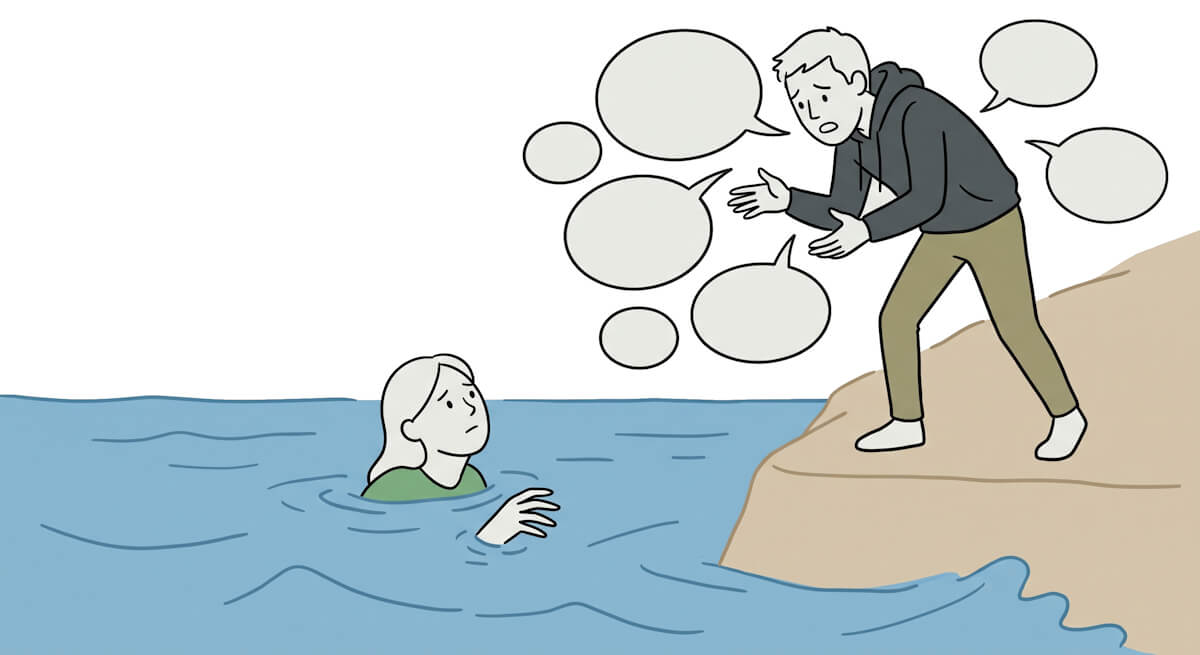
A Break Only Works If You Come Back
This is where “just take a break” can become overly simple advice.
For the flooded partner, a break may feel necessary. For the other partner, watching their spouse walk away can feel like confirmation that the conversation… and perhaps the relationship… does not matter. If difficult subjects are repeatedly postponed and never revisited, asking for space can become avoidance.
So I do not only ask couples whether they are willing to pause. I also ask whether they can make the pause feel safe for both people.
That might sound like:
“I’m getting overwhelmed, and I don’t think I’m hearing you well anymore. I need to stop for a while, but I don’t want to drop this. Can we try again in half an hour?”
The wording does not need to be perfect. What matters is communicating that the conversation is important, asking for a specific amount of space, and naming when you will return.
Then each partner has a job. One has to allow the break without following, continuing the argument by text, or demanding reassurance. The other has to come back when they said they would. If more time is genuinely needed, that needs to be communicated rather than leaving the spouse to wonder.
📩 Bring Peace Back to Your Marriage
Get practical, faith-based tools to help you build trust and stronger connections — delivered straight to your inbox.
What You Do During the Break Matters
A break is intended to help your body settle. It is not extra time to prepare a stronger argument.
Notice what you actually do when you walk away. Are you replaying the conversation and gathering evidence that your spouse is wrong? Are you texting a friend who will take your side? Are you imagining everything you wish you had said? If so, the argument is still happening. It has just moved inside your head.
Instead, do something that helps you return to the present. Take a walk. Pray. Listen to music. Pay attention to your breathing or to the feeling of your feet on the floor. Choose something calming enough that you can eventually become curious about your spouse again.
The point is not to come back with no feelings. It is to come back able to hear more than the parts you disagree with.

When One Person Needs to Talk and the Other Needs Time
Some people understand what they think by talking, and others need quiet before they can sort out what they feel and put it into words. Stress, family history, trauma, and neurodivergence can all affect how someone processes a difficult conversation.
This can create a frustrating mismatch, as one partner who processes out loud may ask several questions to find clarity. The other partner who needs more time may experience those questions as pressure and become even less able to answer. Then the silence makes the first partner more anxious, so they ask more questions.
Neither person has to be the villain for the pattern to become painful.
Understanding the pattern also does not mean excusing everything that happens inside it. Being flooded does not make yelling, intimidation, insults, or refusing to address problems acceptable. Feeling afraid of abandonment does not make it okay to follow someone from room to room or refuse a reasonable request for space.
I think this is an important distinction. Compassion helps us understand why a reaction may be happening, and accountability asks us to take responsibility for what we do with that reaction. Couples need both.
Look for the Pattern, Not the Villain
When couples are stuck here, they often spend a great deal of time trying to prove which person is communicating incorrectly. I am usually more interested in helping them notice the sequence.
Who first realizes the conversation is escalating? What does flooding feel like before either person shuts down or lashes out? What kind of reassurance makes a pause tolerable? How long does each person realistically need? What has made it hard to return to conversations in the past?
Those questions give the couple something more useful to work with than “You always leave” or “You never let anything go.”
They can also create room for a different understanding of each other. Your spouse’s need for space may not mean they are indifferent. Your spouse’s urgency may not mean they are trying to control you. Often, both people are trying to protect the relationship, but their attempts collide.
Learning to Pause Without Disconnecting
Marriage asks us to hold honesty and care at the same time. We need to be able to name what hurts, and we also need enough humility to recognize when we are no longer capable of hearing each other well. Taking a break can be part of that humility.
If you and your spouse repeatedly get caught in this cycle, couples counseling can help you identify it earlier and create a plan that works for both of you. Gottman-informed counseling offers practical tools for recognizing flooding and approaching conflict differently. Christian counseling can also make space for how your faith shapes the way you understand marriage, repair, grace, and responsibility.
You do not have to solve every disagreement in one conversation. A good place to begin may be noticing when you are starting to lose each other and learning how to pause without disappearing.

Written by Elizabeth Canon, MA, LPCC
Don't Stay Stuck in the Same Conflict Cycle
If you and your spouse keep arguing about the same things, couples counseling can help you resolve conflict, communicate more effectively, and learn how to pause without disconnecting. Our Christian counselors would be honored to walk together with you so you can reach greater peace and intimacy in your relationship.