
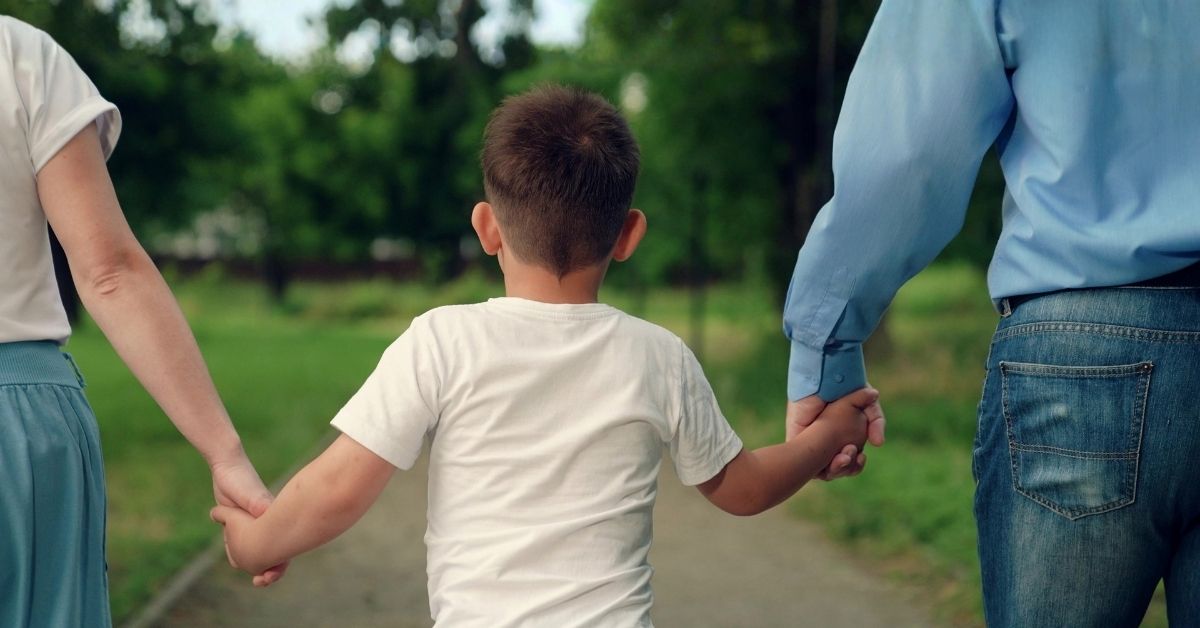
What attachment is, how it forms, and why it matters.
Welcoming a child into your family through adoption is a beautiful and redemptive experience. In the excitement and anticipation of this process, many parents forget that for their child, adoption involves loss, and loss impacts attachment.
But what is attachment? The word attachment gets thrown around in all sorts of contexts and meanings, especially in pop psychology. You may confuse it with affection, connection, or quality of relationship. Maybe you’ve even taken a quiz on your “attachment style” before.
Attachment is, all at once, wildly simple and deeply complex. So what should parents, and especially adoptive parents, know about the process and impact of attachment? In this series, we will start with what attachment is and how it forms, before exploring attachment styles and practical attachment-focused concepts that can deepen security, safety, and connection in your parenting, relationships, and marriage.
What is attachment?
Attachment is best described as the deep and enduring biological, social, emotional, spiritual, and mental connection that children and caregivers establish early in life (Levy & Orlans, 2014). It is also the story of every human being on earth! People across the globe, no matter where they are born or what culture they belong to, go through the process of attachment. Attachment is at the core of our beliefs, relationships, emotions, behaviors, self-perception, and even our relationship with God. The study of attachment science is our human attempt to observe the truth Scripture has revealed from the beginning, that we serve a God who draws near, remains with us, and holds us securely. Scripture offers beautiful echoes of the Lord’s relational promises to us:
“Remain in me, as I also remain in you. No branch can bear fruit by itself; it must remain in the vine” (John 15:4).
“The Lord is close to the brokenhearted and saves those who are crushed in spirit” (Psalm 34:18).
“For I am convinced that neither death nor life… nor anything else in all creation, will be able to separate us from the love of God that is in Christ Jesus our Lord” (Romans 8:38-39).
How Attachment Develops: The Four-Step Process
Understanding the process of attachment empowers parents to understand their children and themselves in order to engage in healing relationships. The most foundational and formational stages of attachment begin in the womb and continue throughout the first years of life. To explain the process simply, we can view it as:
Needs > Reaction > Gratification > Formation
1. Needs
Babies have LOTS of needs — more than any other species of mammal on earth! God created human infants profoundly dependent on their caregivers for every need. This dependency creates opportunities for bonding and attachment to develop — a tender reflection of our dependency on God for our every need. Just as we can do nothing without the Lord, an infant can do nothing without caregivers. Babies must be fed, put to sleep, diapered, and cleaned. They cannot move or speak; they cannot clothe or protect themselves.
Beyond physical needs, babies also need love. The infant brain is an open-loop system (Levy & Orlans, 2014), meaning that it develops in concert with outside input from caregivers. Unlike your circulatory system, which is closed and self-sustaining, the infant brain needs responses from caregivers to grow!
2. Reaction
When babies have needs, they have an arousal response: they cry… loudly! Babies don’t just calmly weep — they flail, scream, and cry to gain the attention of their caregivers. We recognize this reaction as a nervous-system activation. Babies are not only responding emotionally, but physiologically as well, and this response exceeds the infants’ individual ability to self-soothe. Whether a baby is hungry, cold, tired, or uncomfortable, any and all needs can only be met by an attuned caregiver — meaning a mother or father who notices their baby’s reactions and shifts in mood or energy, and responds in kind.
3. Gratification
Meeting a baby’s needs is also referred to as gratification. To name a few examples, caregivers gratify hunger with feeding, sleepiness with rest, pain with comfort, and fear with soothing. The emotional needs of infants are gratified in several ways referred to as attachment cues. The primary cues of attachment are eye contact, gentle touch, holding, and reciprocal smiles. All of these actions communicate to the infant, “I see you. I’m here with you. You are safe with me.”
4. Formation
The response, or lack of response, that babies and young children receive to their needs ultimately forms their expectations about themselves and their caregivers. These early attachment experiences can even influence how we understand and experience our relationship with God. When these needs are met in an attuned, consistent, nurturing manner, children develop secure attachment — they learn that caregivers are trustworthy and safe, and as result, these children are calm, confident, and self-assured.
📩 Nurture Your Family's Connection
Receive faith-based relationship tips to help you foster safety, trust, and deep connection through every season of life.
When Attachment Is Disrupted
When attachment goes wrong with vulnerable infants and children, they adapt to their circumstances to the best of their abilities. These adaptations can later appear as behavioral, emotional, and spiritual issues. Attention difficulties and hyperactivity, opposition and defiance, and other symptoms are common in children with histories of disruption to the attachment process. Children may harbor negative self-beliefs such as, “I am bad, unwanted, worthless, helpless, and unlovable” and struggle to trust or rely on caregivers (Levy & Orlans, 2014).
Why Attachment Matters for Adoptive Families
The good news? The same open-loop brain that grows in response to early life experiences can be healed in the context of new, healthy experiences in relationship with caregivers. And this is why attachment matters for adoptive families. Your child is entering your family with a story that began before you met them. Understanding the story of attachment your child has, and how this story impacts them, is the foundation to providing new experiences of safety, trust, nurture, and connection. Reflecting the steadfast love of our God, parents can offer new experiences again and again that communicate, “I see you. I’m here with you. You are safe with me.”
Restored attachment and felt safety can help parents and children experience, in relationship with one another, echoes of the promises and blessings of our Heavenly Father. In Him, we are accepted (Romans 15:7), we are His children (John 1:12), we are a crown of beauty in His hand (Isaiah 62:3), and we are offered His peace that surpasses all understanding (Philippians 4:7). As parents offer their children new experiences of safety, belonging, comfort, and steadfast love, they have the beautiful opportunity to reflect the character of the God who first loved us.

Written by Erin Coughlin, MA, LPC, LMFT
Take the Next Step in Your Family’s Journey
Navigating attachment and adoption doesn’t have to be a process you navigate alone. Whether you are preparing to welcome a child home or currently working through attachment disruptions, our Christian counselors can help your family build lasting security, trust, and connection. Reach out today to begin forming new experiences of safety and hope in your home.
REFERENCES
Click to Expand
Levy, T. M., & Orlans, M. (2014). Attachment, trauma, and healing: Understanding and treating attachment disorder in children, families and adults (2nd ed.). Jessica Kingsley Publishers.