
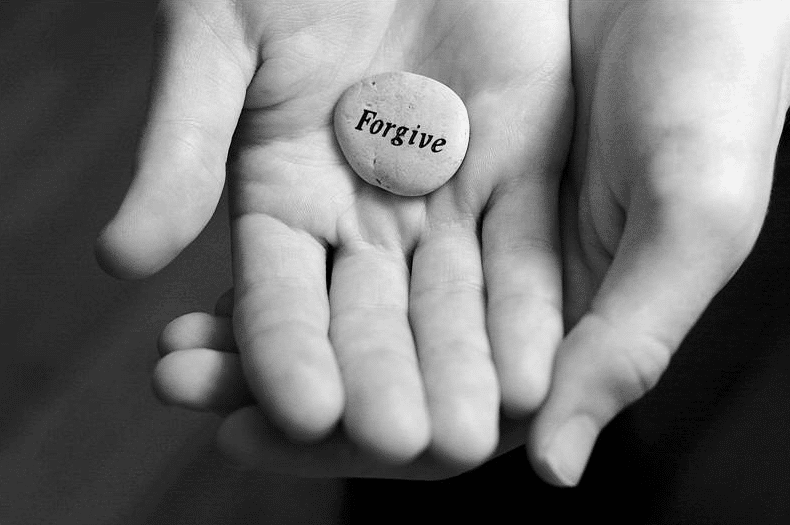
Families that Forgive

Learn how to forgive

“Forgiveness is not an occasional act, it is a constant attitude.” -Martin Luther King, Jr.

Families that forgive

Forgiveness is something that must become second-nature for us in order to live in healthy relationship with others and to love them well.

Pastor Danny Silk once said: “You have two choices when you get offended or hurt- you can pull away from love, or you can choose to press into it.”

What does “pressing into love mean?” Jesus gives us an answer in Matthew 18:21-22: “Then Peter came up and said to him, “Lord, how often will my brother sin against me, and I forgive him? As many as seven times?” Jesus said to him, “I do not say to you seven times, but seventy-seven times.”

What is the point? You can never reach a place of unforgiveness, and neither can anyone else.

The Love that we press into is supernatural and unconditional. One of my friends recently said this to me about the subject: “We are now disqualified from it [unforgiveness]. Jesus declared forgiveness once and for all. If we “receive” it for ourselves but withhold from others, we condemn ourselves. You can’t have one without the other.”

The family is a good place to be “hurt”; the enemy has been running this play for thousands of years. If he can divide a family, then the legacy is fractured. Ideally, God designed family to be a mini-version of His Bride- the church. It is, essentially, a place where love and faith can grow and be developed, so that its members go out into the world and proclaim the Good News of Christ.

But, without relationship, unity, and a legacy of love- people end up feeling isolated, bitter, sick, and lacking in trust. So, why do we tend to see a greater degree of bitterness, divorce, and disunity instead of a vast array of “mini-churches?” There are so many choices that people make that seem “unforgivable” in our minds, but I’m here to tell you that the benefits of forgiving that person seriously outweighs any justified reasoning for hanging onto vengeance.

What are the benefits of unforgiveness?

There are none. Simply put- there is no comfort in retaliation.

Graduate Research Assistants, Trampas J. Rowden and Sean D. Davis at the School of Family Life, Brigham Young University conducted research regarding the issue of unforgiveness. Here are some of their findings: “Health professionals tell us that the body manufactures “high voltage” chemicals like adrenaline and cortisone when you don’t forgive. Too many of these chemicals can result in tension-related ills such as headaches and abdominal pains.

Left unchecked, this can result in more serious problems such as ulcers, gastritis or irritable bowel syndrome. When couples and families fail to forgive, unequal relationships are created and maintained. True closeness is an impossibility because the “offended” is in a position of holding the “offender” in bondage, and the obsession with being wronged and seeking revenge holds the victim in bondage as well.

The person who made the mistake or hurt the other is kept in a “one down” position of being indebted to the other. The following phrases are common to such a situation:

“I’m (the offended) going to make you (the offender) pay for what you did.”

“You’re (offender) never going to live this down.”

“You (offender) owe me. I’m (offended) going to get even with you.”

“I’ll (offended) hold this against you (offender) for the rest of your life.”

“I’ll (offended) get you (offender) for this.”

Proverbs 17: 9 states that “love prospers when a fault is forgiven.” This means that love suffers, or fails to thrive, when offense and unforgiveness are present.

I think that what stops many people from granting forgiveness is that they believe that if they forgive the person, they are condoning the “offender’s” sin. Holding grudges chains you to the past and causes a bitterness like a steady drip of toxin into your life.

So, how do you forgive?

What are the benefits of forgiveness?

Researchers Maio, Thomas, Fincham, & Carnelly studied the effects of forgiveness in families over a one year time period. Here is how they define “forgiveness” as it is used in their research:

“…a deliberative process that transforms a vengeful, negative response into a positive one… That is, the forgiver actively attempts to move from negative thoughts, feelings, and behaviors toward the transgressor to more positive thoughts, feelings, and behaviors.”

Here is a brief overview of their specific research and the results that they found:

This study examined the role of forgiveness in different family relationships. In 2 laboratory sessions 1 year apart, 114 families (each including 2 parents and 1 child) completed a new measure of family forgiveness and many individual-level, relationship-level, and family-level variables that have been previously linked with forgiveness. After validating the measure of family forgiveness in cross-sectional analyses, investigators performed longitudinal analyses to examine the role of forgiveness in each family relationship over the 1-year interval. Results indicated many important positive consequences of forgiveness on individual traits, aspects of each family relationship, and general family environment.”

What this means is that across 114 families, the active pursuit of forgiveness led to healing and positive consequences within the family members themselves, and between their relationships. Even from a secular, non-Christian psychological journal, the effects of forgiveness are undeniable.

I must forgive because God forgave me- “Let all bitterness and wrath and anger and clamor and slander be put away from you, along with all malice. 32 Be kind to one another, tender-hearted, forgiving each other, just as God in Christ also has forgiven you” (Eph 4:31-32).

God is so good at this and gives us Grace that brings freedom! Micah 7:19 says, “God, you bury my sin in the deepest sea!” Psalm 103:12- says that “He removes my guilt as far as the East is from the West.” You can’t have forgiveness without Grace.

What are some steps toward forgiveness in my family?

Marriage and family therapists James Harper and Mark Butler offer additional help in forgiving and seeking forgiveness from others.

Seeking forgiveness from others:

-Engage in self-confrontation – regularly examine your actions and motives. Ask “Is it I?” – be the first to confess and apologize, and, if appropriate, reconcile and restore your relationship.

-Self-disclose – share your feelings and story with family members or loved ones.

-Avoid confessions in which you blame or fail to accept responsibility (such as saying, “I’m sorry, but if you wouldn’t have said that . . . . ).Search for solutions instead of blame.

Forgiving others:

-Live your own forgiven-ness – we all have experiences where others have forgiven us.

-Remember that every person’s sense of worth is important – realize that by forgiving them you aid in their personal experience of forgiveness.

-Seek with all your heart and mind for anger to be lifted. This may often include prayer, meditation, or some other activity to rid yourself from anger’s poison.

-Develop empathy and emotional understanding for the situation of your offender. For example, do they have parents or children? What were the circumstances surrounding what they did?

-Avoid unnecessary retelling of the offense – dwelling on such reinforces an unforgiving heart as well as solidifying the event in your mind.

-Remember that forgiving rarely entails memory loss but freedom from preoccupation with the offense – do not let your thoughts, emotions, and reactions be consumed by the offense.

Boundaries may need to be set with family members who continue acting in ways that are destructive, abusive, and unhealthy. Remember that forgiveness often includes clearly-defined boundaries and that these two concepts are not opposites. Setting boundaries in order to bring reconciliation, relationship, and peace can be one of the most loving things you ever do.

Forgiving yourself and/or members of your family leads to a restorative peace that could effect generations.

Choose forgiveness today. Choose to begin the process of releasing bitterness, anger, and toxic unforgiveness from your life and in your family, today.

Reference:

Unraveling the role of forgiveness in family relationships. Maio, Gregory R.; Thomas, Geoff; Fincham, Frank D.; Carnelley, Katherine B. Journal of Personality and Social Psychology, Vol 94(2), Feb 2008, 307-319.http://dx.doi.org/10.1037/0022-3514.94.2.307

For additional resources, or to connect with one of our licensed Christian counselors, email or call our office to schedule a consultation.


For more information or to schedule a counseling appointment today:

Call us at 303-902-3068
or fill out the form below.

The Latest from our blog

The Latest from the Blog

The Latest from the Blog

The Latest from the Blog

what to expect

We’re here to help you heal, grow and thrive through Christian counseling.

We understand – the thought of coming to counseling can be intimidating.

Trust us when we say there’s nothing to be afraid of! We’re normal people just like you who have a desire to help you live your life to the fullest.

To help ease any discomfort you may have at the thought of counseling with us, we’d like to let you know how to prepare for counseling and what to expect.

First, we should tell you what therapy is…

  • Therapy is about helping you reach a goal or goals; it’s about getting you to a place where you feel comfortable and satisfied with the way life is humming on around you and within you.
  • Therapy is about working with your therapist to achieve the outcome you’re hoping for. A good therapist is like a coach, teacher, consultant, and referee all wrapped into one. They’ll listen to you and understand you without judging you. They’ll help you see more clearly how you got to where you are and how to get to where you want to go. They’ll give you the confidence to talk about things with others (spouse, family member, friend, co-worker, etc) that you may have been too uncomfortable to bring up on your own.
  • Ultimately, therapy equips you to work through any obstacle that lies between where you are now and where you really want to be.

…and what therapy is not

  • Therapy isn’t always a quick, painless fix.  Sometimes things get worse before they get better.  But if you stick with it and do the hard work of walking through this challenging season with your therapist, things will get better!
  • Therapy isn’t about your therapist doing the work for you.  However good a therapist may be, he/she cannot make you reach your goal(s). They can’t fix your problem(s) for you. You will still have to work at it. What a good therapist will do for you is give you the means and the guidance to help you reach your goal(s), and will walk alongside you until you get there.

Have some questions, or need more info? Click here.

Frequently Asked Questions

On how to prepare for counseling

What will my first session be like?

Your first session is a chance for you to make sure you and your counselor are a great fit! They might ask you about what’s brought you in, if you have questions, and some history. Your counselor may take notes as you talk, to help you as you create a therapy plan together to reach your goals. (You’re not being graded or judged!)

The first session builds the foundation for future growth and healing, and you’ll probably spend a good amount of time talking about your background and the history of what’s bringing you in. You might feel strong emotions, cry, or feel overwhelmed at times, but your counselor is there to help you feel safe, comfortable, and supported.

The therapeutic process can feel slow when you first start. You may feel like the first few sessions haven’t done much, but they are building up to the deeper work! It’s important to remember one session won’t “fix” everything. It can take a few sessions to dig deep before you get to the powerful work of healing.

On the other hand, as you dive into sharing deep hurts, you may notice yourself feeling more vulnerable, raw, or emotional after your first few sessions. This is totally normal! Your therapist can help you identify these deeper emotions and causes, and help you care for yourself as you open yourself up to the process of healing.

The beautiful thing about counseling is that it’s for you. There’s no perfect formula for when you’ll “feel better,” (though sometimes we wish there was!).

As you address important issues, implement the tools and strategies you talk about in counseling, and work through specific things, you may start noticing small changes before big ones.

Give yourself time to get comfortable, feel safe with your therapist, and share your hurts and sorrows. Healing takes time, and there is no pressure or deadline to get there! You’ll start noticing the positive changes in your life at exactly the pace that is right for you.

By blending what fits you both practically and personally!

Practically, what location do you live closest to? Are you looking for someone in person or online? Do you have a price range in mind? Do you need a counselor with specific skills?

Personally, are you more comfortable with a counselor that is soft-spoken and gently encouraging? Do you prefer someone strong who can challenge you to grow? Do you enjoy diving deep into emotions? Or do you prefer concrete strategies and tools?

You can find all this information and more on each counselor’s bio page!

Not sure where to start? Contact our admin team and they can help match you with the right counselor for you!

No worries! We want to make sure that you find the absolute best counselor for you. If you meet with a counselor at Cornerstone and feel like they’re not quite right, or you want someone with more experience or training in a specific area, we offer one free transfer session to a new counselor on our team.

Just reach out to our office and we can set that up for you!

Definitely limit distractions! Wear something comfortable, since you may be sitting or moving around. The last thing you need is that itchy tag stealing your attention every few minutes. Turn notifications off on your phone, watch, and other devices.

If you’re doing online counseling, make sure you’re in a quiet, confidential spot. If you’re coming into the office, come a few minutes early to scope out the location, find the office, and enjoy a cup of coffee or tea in our waiting room.

And of course, make sure you complete your paperwork ahead of time! This not only helps your therapist jump right in, it can help you think through your goals and desires for healing, which helps you make the most of your time together.

To learn more, read our article How to Prepare for Your First Christian Counseling Session.

Therapy length varies based on your needs, goals, and the complexity of your concerns. Some people see progress in a few sessions, while others benefit from a longer course of treatment for deeper or ongoing issues.

Your counselor will work with you to recommend a personalized plan that supports lasting healing and growth. We’ve also created a simple roadmap to help you understand the five phases of therapy: connection, planning, change, review, and celebration.

Get to know us! Follow Cornerstone on Social Media

The Latest from the Blog

what to expect

We’re here to help you heal, grow and thrive through Christian counseling.

We understand – the thought of coming to counseling can be intimidating.

Trust us when we say there’s nothing to be afraid of! We’re normal people just like you who have a desire to help you live your life to the fullest.

To help ease any discomfort you may have at the thought of counseling with us, we’d like to let you know how to prepare for counseling and what to expect.

First, we should tell you what therapy is…

  • Therapy is about helping you reach a goal or goals; it’s about getting you to a place where you feel comfortable and satisfied with the way life is humming on around you and within you.
  • Therapy is about working with your therapist to achieve the outcome you’re hoping for. A good therapist is like a coach, teacher, consultant, and referee all wrapped into one. They’ll listen to you and understand you without judging you. They’ll help you see more clearly how you got to where you are and how to get to where you want to go. They’ll give you the confidence to talk about things with others (spouse, family member, friend, co-worker, etc) that you may have been too uncomfortable to bring up on your own.
  • Ultimately, therapy equips you to work through any obstacle that lies between where you are now and where you really want to be.

…and what therapy is not

  • Therapy isn’t always a quick, painless fix.  Sometimes things get worse before they get better.  But if you stick with it and do the hard work of walking through this challenging season with your therapist, things will get better!
  • Therapy isn’t about your therapist doing the work for you.  However good a therapist may be, he/she cannot make you reach your goal(s). They can’t fix your problem(s) for you. You will still have to work at it. What a good therapist will do for you is give you the means and the guidance to help you reach your goal(s), and will walk alongside you until you get there.

Have some questions, or need more info? Click here.

Frequently Asked Questions

On how to prepare for counseling

What will my first session be like?

Your first session is a chance for you to make sure you and your counselor are a great fit! They might ask you about what’s brought you in, if you have questions, and some history. Your counselor may take notes as you talk, to help you as you create a therapy plan together to reach your goals. (You’re not being graded or judged!)

The first session builds the foundation for future growth and healing, and you’ll probably spend a good amount of time talking about your background and the history of what’s bringing you in. You might feel strong emotions, cry, or feel overwhelmed at times, but your counselor is there to help you feel safe, comfortable, and supported.

The therapeutic process can feel slow when you first start. You may feel like the first few sessions haven’t done much, but they are building up to the deeper work! It’s important to remember one session won’t “fix” everything. It can take a few sessions to dig deep before you get to the powerful work of healing.

On the other hand, as you dive into sharing deep hurts, you may notice yourself feeling more vulnerable, raw, or emotional after your first few sessions. This is totally normal! Your therapist can help you identify these deeper emotions and causes, and help you care for yourself as you open yourself up to the process of healing.

The beautiful thing about counseling is that it’s for you. There’s no perfect formula for when you’ll “feel better,” (though sometimes we wish there was!).

As you address important issues, implement the tools and strategies you talk about in counseling, and work through specific things, you may start noticing small changes before big ones.

Give yourself time to get comfortable, feel safe with your therapist, and share your hurts and sorrows. Healing takes time, and there is no pressure or deadline to get there! You’ll start noticing the positive changes in your life at exactly the pace that is right for you.

By blending what fits you both practically and personally!

Practically, what location do you live closest to? Are you looking for someone in person or online? Do you have a price range in mind? Do you need a counselor with specific skills?

Personally, are you more comfortable with a counselor that is soft-spoken and gently encouraging? Do you prefer someone strong who can challenge you to grow? Do you enjoy diving deep into emotions? Or do you prefer concrete strategies and tools?

You can find all this information and more on each counselor’s bio page!

Not sure where to start? Contact our admin team and they can help match you with the right counselor for you!

No worries! We want to make sure that you find the absolute best counselor for you. If you meet with a counselor at Cornerstone and feel like they’re not quite right, or you want someone with more experience or training in a specific area, we offer one free transfer session to a new counselor on our team.

Just reach out to our office and we can set that up for you!

Definitely limit distractions! Wear something comfortable, since you may be sitting or moving around. The last thing you need is that itchy tag stealing your attention every few minutes. Turn notifications off on your phone, watch, and other devices.

If you’re doing online counseling, make sure you’re in a quiet, confidential spot. If you’re coming into the office, come a few minutes early to scope out the location, find the office, and enjoy a cup of coffee or tea in our waiting room.

And of course, make sure you complete your paperwork ahead of time! This not only helps your therapist jump right in, it can help you think through your goals and desires for healing, which helps you make the most of your time together.

To learn more, read our article How to Prepare for Your First Christian Counseling Session.

Therapy length varies based on your needs, goals, and the complexity of your concerns. Some people see progress in a few sessions, while others benefit from a longer course of treatment for deeper or ongoing issues.

Your counselor will work with you to recommend a personalized plan that supports lasting healing and growth. We’ve also created a simple roadmap to help you understand the five phases of therapy: connection, planning, change, review, and celebration.

Get to know us! Follow Cornerstone on Social Media

The Latest from the Blog

what to expect

We’re here to help you heal, grow and thrive through Christian counseling.

We understand – the thought of coming to counseling can be intimidating.

Trust us when we say there’s nothing to be afraid of! We’re normal people just like you who have a desire to help you live your life to the fullest.

To help ease any discomfort you may have at the thought of counseling with us, we’d like to let you know how to prepare for counseling and what to expect.

First, we should tell you what therapy is…

  • Therapy is about helping you reach a goal or goals; it’s about getting you to a place where you feel comfortable and satisfied with the way life is humming on around you and within you.
  • Therapy is about working with your therapist to achieve the outcome you’re hoping for. A good therapist is like a coach, teacher, consultant, and referee all wrapped into one. They’ll listen to you and understand you without judging you. They’ll help you see more clearly how you got to where you are and how to get to where you want to go. They’ll give you the confidence to talk about things with others (spouse, family member, friend, co-worker, etc) that you may have been too uncomfortable to bring up on your own.
  • Ultimately, therapy equips you to work through any obstacle that lies between where you are now and where you really want to be.

…and what therapy is not

  • Therapy isn’t always a quick, painless fix.  Sometimes things get worse before they get better.  But if you stick with it and do the hard work of walking through this challenging season with your therapist, things will get better!
  • Therapy isn’t about your therapist doing the work for you.  However good a therapist may be, he/she cannot make you reach your goal(s). They can’t fix your problem(s) for you. You will still have to work at it. What a good therapist will do for you is give you the means and the guidance to help you reach your goal(s), and will walk alongside you until you get there.

Have some questions, or need more info? Click here.

Frequently Asked Questions

On how to prepare for counseling

What will my first session be like?

Your first session is a chance for you to make sure you and your counselor are a great fit! They might ask you about what’s brought you in, if you have questions, and some history. Your counselor may take notes as you talk, to help you as you create a therapy plan together to reach your goals. (You’re not being graded or judged!)

The first session builds the foundation for future growth and healing, and you’ll probably spend a good amount of time talking about your background and the history of what’s bringing you in. You might feel strong emotions, cry, or feel overwhelmed at times, but your counselor is there to help you feel safe, comfortable, and supported.

The therapeutic process can feel slow when you first start. You may feel like the first few sessions haven’t done much, but they are building up to the deeper work! It’s important to remember one session won’t “fix” everything. It can take a few sessions to dig deep before you get to the powerful work of healing.

On the other hand, as you dive into sharing deep hurts, you may notice yourself feeling more vulnerable, raw, or emotional after your first few sessions. This is totally normal! Your therapist can help you identify these deeper emotions and causes, and help you care for yourself as you open yourself up to the process of healing.

The beautiful thing about counseling is that it’s for you. There’s no perfect formula for when you’ll “feel better,” (though sometimes we wish there was!).

As you address important issues, implement the tools and strategies you talk about in counseling, and work through specific things, you may start noticing small changes before big ones.

Give yourself time to get comfortable, feel safe with your therapist, and share your hurts and sorrows. Healing takes time, and there is no pressure or deadline to get there! You’ll start noticing the positive changes in your life at exactly the pace that is right for you.

By blending what fits you both practically and personally!

Practically, what location do you live closest to? Are you looking for someone in person or online? Do you have a price range in mind? Do you need a counselor with specific skills?

Personally, are you more comfortable with a counselor that is soft-spoken and gently encouraging? Do you prefer someone strong who can challenge you to grow? Do you enjoy diving deep into emotions? Or do you prefer concrete strategies and tools?

You can find all this information and more on each counselor’s bio page!

Not sure where to start? Contact our admin team and they can help match you with the right counselor for you!

No worries! We want to make sure that you find the absolute best counselor for you. If you meet with a counselor at Cornerstone and feel like they’re not quite right, or you want someone with more experience or training in a specific area, we offer one free transfer session to a new counselor on our team.

Just reach out to our office and we can set that up for you!

Definitely limit distractions! Wear something comfortable, since you may be sitting or moving around. The last thing you need is that itchy tag stealing your attention every few minutes. Turn notifications off on your phone, watch, and other devices.

If you’re doing online counseling, make sure you’re in a quiet, confidential spot. If you’re coming into the office, come a few minutes early to scope out the location, find the office, and enjoy a cup of coffee or tea in our waiting room.

And of course, make sure you complete your paperwork ahead of time! This not only helps your therapist jump right in, it can help you think through your goals and desires for healing, which helps you make the most of your time together.

To learn more, read our article How to Prepare for Your First Christian Counseling Session.

Therapy length varies based on your needs, goals, and the complexity of your concerns. Some people see progress in a few sessions, while others benefit from a longer course of treatment for deeper or ongoing issues.

Your counselor will work with you to recommend a personalized plan that supports lasting healing and growth. We’ve also created a simple roadmap to help you understand the five phases of therapy: connection, planning, change, review, and celebration.

Get to know us! Follow Cornerstone on Social Media

The Latest from the Blog