
Is it just me, or does January arrive every year waving its arms and screaming about the latest hacks, shortcuts, and promise of change “when you like and subscribe” to this channel, that deal, or these offers?
Even when we try to resist it, the New Year hums with so much urgency to become, decide, fix, and resolve. The air is thick with moral pressure and momentum. And it seems that we are subtly told that if we do not move quickly, intentionally, and visibly forward, we are already behind.
But as a therapist — and as a fellow human who has lived through enough seasons to distrust haste — I want to offer a countercultural invitation this year.
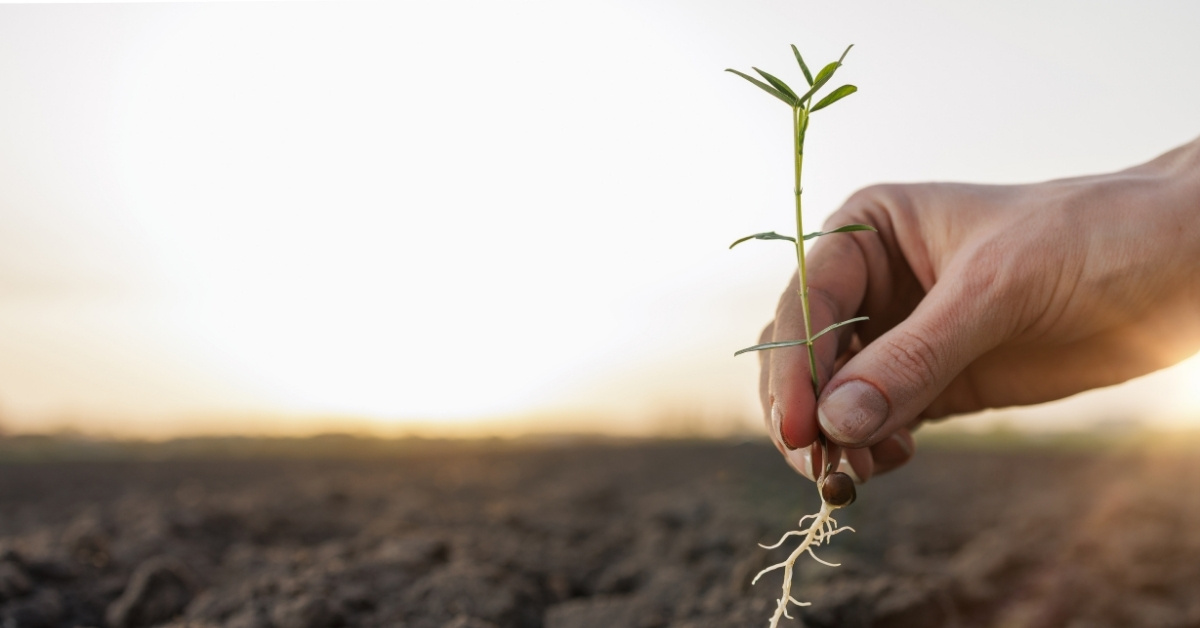
I enjoy choosing an anchoring word for the year, as many of you do, and this year I’ve landed on: rooted.
Not productive, disciplined, or optimized. Rooted.
I want to learn more throughout this coming year about depth over speed. Rooted things don’t rush. They grow downward before they grow upward. They expand slowly, invisibly, and with deep attentiveness to the soil they are in. Roots do not strain toward the sun; they anchor. They receive.
I also want to note that I am in the business of change, and I am not advocating for us to release goals, to discourage people who choose focuses for the year around energy, momentum, movement, etc. I am naming a pattern that I see consistently and offering a new rhythm I believe we could all benefit from.
Fasting from the Hustle
Urgency often masquerades as virtue. Yeah? Have you witnessed this?
It dresses itself up as responsibility, ambition, faithfulness, even obedience. But urgency is rarely the voice of wisdom. More often, it is the language of fear or anxiety: If I don’t act now, I’ll miss my chance. If I don’t change quickly, I’ll fail. If I rest, I’ll fall behind.
John Mark Comer names this clearly in The Ruthless Elimination of Hurry, arguing that hurry is not just a scheduling problem but a spiritual condition. Hurry, he writes, is incompatible with love — love of God, love of others, and love of self. When we live hurried lives, we may accomplish many things, but we struggle to become anyone. (Side note: our men’s group jokes that JMC is one of our sponsors because of how much we quote him. If you haven’t read his stuff, go check it out!)
As a therapist, I see this daily. Clients arrive exhausted, not because they are lazy or undisciplined, but because they have been living at a pace their nervous systems were never designed to sustain. Their anxiety is not a personal failure — it is a biological protest. I, too, have felt this time and time again in my own life and work and want to move towards greater regulation and a more sustainable pace.
The body knows what the soul has been trying to say all along: This is all too fast.
Scripture has always honored this truth! Consider Psalm 46:10:
“Be still, and know that I am God”
This is not simply a sentimental suggestion. It seems to be a stern, tender, disruptive command — motivated by love and concern. I’m learning that stillness requires courage in a culture of acceleration. Stillness confronts the lie that our value is dependent on our velocity.
I have also learned through the years, personally and professionally, that letting go of urgency does not mean letting go of care. It just means relinquishing the false belief that everything is important and must happen immediately.
The Courage of Staying the Same (For Now)
I find that there is a particular kind of bravery required to stay the same.
Not forever and not in denial, but just for now.
Januaries seem to view sameness and maintenance as mediocre and disappointing, shaming those who lack focus on growth and change. Stability can be mistaken for stagnation. But psychologically and spiritually, this feels like a tragic misunderstanding.
Many people do not need radical reinvention — they need increased integration. Subtle, simple, slow, intentional movements that lead to wholeness.
We need time for what has already shifted internally to settle into the body. We need room for healing to become habit, not just insight. We need consistency long enough for safety to be restored.
In therapy, we often talk about the “window of tolerance” — the zone in which growth is actually possible. Too much change too quickly pushes us into dysregulation, overwhelm and/or shutdown. Ironically, the push for transformation can become the very thing that prevents it. Have you ever experienced this?
Also, if you are emerging from grief, trauma, burnout, or profound transition as we enter into 2026, staying the course and maintaining your current trajectory may be the most loving choice available to you. Choosing not to escalate expectations. Choosing not to demand more fruit than this season can bear.
This is truly not complacency. It is wisdom!
When Stability is Growth
One of the most quiet and cunning lies I hear often in the therapy room is this: If I’m not actively changing, I’m failing.
But stability is not the absence of growth; it can often be the evidence of it!
If you are sleeping more consistently than you used to, if your emotions feel less extreme, if your relationships feel steadier, if you are moving your body more throughout the week, if you are saying no to more calories than you need to, if you are no longer living in constant crisis, even if it’s not perfect…. Know that these are all beautiful forms of growth.
In the nervous system (and in our relationships with others), stability precedes expansion. We cannot explore, create, or risk unless we feel safe enough to do so. Children play freely only when they sense that their environment is secure. And really, we as adults are no different.
Jesus himself honored rhythms of withdrawal and rest. Time and time again throughout the Gospels, we see him stepping away from crowds, urgency, and need — even legitimate needs — to be alone with the Father.
“But Jesus often withdrew to lonely places and prayed.” (Luke 5:16)
Notice that word often. He had a pattern of engaging in this behavior. Rhythms of slowing down and stepping away.
Jesus did not wait until exhaustion forced him to rest. He chose it as a way of life.
John Mark Comer suggests that the spiritual disciplines such as silence, Sabbath, and simplicity are not add-ons to an already full life, they are protective boundaries against becoming someone we never intended to be.
So, stability, in this sense, is not passive. It is wildly intentional.
Hope over Hustle
Hurry, busyness, and hustling promises excitement, control, praise, and productivity. But it doesn’t always lead to increased hope or healing.
Hustle whispers: If I do enough good, I’ll be good enough.
Hope says: I will show up faithfully and let God do what only God can do. I expect something good to happen.
In counseling, I often sit with people who are exhausted not because they lack hope, but because they have been carrying burdens and responsibility that was never theirs. Because they’ve overworked themselves. They have been hustling for healing, security, certainty, and self-worth.
But hope is not earned through exertion — it seems to be received through surrender.
Romans 15:13 offers a beautiful reorientation:
“May the God of hope fill you with all joy and peace as you trust in him, so that you may overflow with hope by the power of the Holy Spirit.”
The word “trust,” in its original Hebrew, means to “lean your full weight onto something.” Hope is not something I can manufacture on my own — it overflows when trust replaces striving.
This year, hope may look like doing less, not more. It might look like unlearning. It may look like flexing or fully releasing timelines and quotas. It may look like believing that God is at work even when nothing appears to be happening on the surface.
Roots grow in darkness — quietly, faithfully and without applause. Roots are unseen work.
Becoming Rooted
I think that to be rooted is to locate your life in something deeper than performance.
Roots draw nourishment from what cannot be seen; roots require patience and remaining.
Jeremiah paints this image with powerful clarity:
“Blessed is the one who trusts in the Lord,
whose confidence is in him.
They will be like a tree planted by the water
that sends out its roots by the stream.
It does not fear when heat comes;
its leaves are always green.
It has no worries in a year of drought
and never fails to bear fruit.” (Jeremiah 17:7–8)
Notice that the tree does not avoid heat or drought. Rootedness does not prevent hardship — it prepares us for it. In my work with clients, I am less interested in how quickly someone changes and more interested in how deeply they are anchored and consistent over time. Surface-level change is fragile and fickle. Rooted change is more enduring and meaningful.
Reflection Questions
As you enter this year, consider sitting gently with these questions — without rushing to answer them. Let these questions linger:
- Where has urgency been driving my life more than wisdom?
- What would it look like to honor stability as a form of growth this season?
- In what areas am I being invited to stay the same (for now) without shame?
- How has hustle shaped my understanding of faith, worth, or healing?
- What practices might help me become more rooted rather than more productive?
Written by Kegan Mosier, M.A, LPC, Clinical Supervisor, Internship Program Director
Support for a Rooted Life
You don’t have to navigate this season alone. Counseling can help you release urgency, restore regulation, and build a life anchored in wisdom rather than hustle. Whether you’re seeking clarity, healing, or simply a steadier pace, our Christian counselors are here to support you with care, patience, and clinical excellence.